
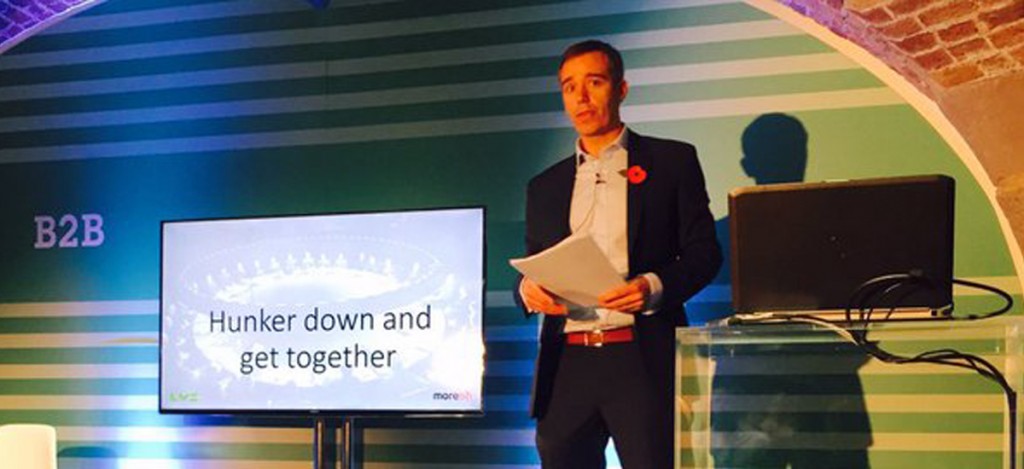
How do you build the perfect marketing team?
Making sure everyone has clearly defined on their roles within the team but has the same passion for excellence. Getting the right balance of insight and strategy from the client, and a strong creative input and vision from the agency. We work closely with our clients to really get to the crux of the campaign and what they want it to achieve and deliver. The beauty of the Moreish team is that we have extremely flexible, elastic capacity to pull in additional ‘best of breed’ specialist resources from the Moreish network as and when it’s needed. This really helped us cherry pick exactly the right resource to be ultra-responsive and strike the right chord with the Take Heart campaign.
Which campaigns have you seen recently that are defining the marketing landscape?
Some of the most effective campaigns I’ve seen so far this year are ones that manage to cut through all of the noise and snap my subconscious advertising filter into awake mode – the ‘refreshingly honest’ campaign from Oasis drinks being one, and Nordnet Norge’s ‘Welcome to transparent banking’ being another.
We know not all brands can afford to be this bold especially in the finance sector, but what both of these examples do which is bold and commendable is to take a step back, remove the marketing veil, and acknowledge the hard cold truth of how their messages are perceived. The result? They’re memorable, witty and create an instant bond of trust between the brand and consumer.
What types of company do you see excelling at marketing at the moment?
We’re a financial and B2B agency and there is a lot great work in these areas that don’t get the limelight they always deserve. But at the same time there is a lot that we can learn from other sectors. Companies that are smart about personalisation – like Amazon and Netflix – they use insight from the data they collect to make helpful suggestions that enhance the user experience. Community-based companies like Airbnb and TripAdvisor are doing well too, designed to be useful at their core, they seem to be closer to what the user wants. They’re both great websites in different ways. And LV= and Prudential are two financial brands that I think are doing great jobs at making their offering more relevant and engaging with more authenticity than some of the rest.
Marketing is becoming more and more data and technology-driven, how can marketers ensure the right balance between creative thinking and scientific marketing?
In many ways, we’re lucky to be marketing in an age where we’ve got unprecedented levels of insight into the successes and failures of our marketing efforts in such granular detail. But equally, the amount of information can sometimes be stifling to creativity – distracting even, if you can’t work out which bits of information are relevant.
All of this data provides fantastic insight into what has worked and what hasn’t – it’s invaluable for strategic planning and course-correcting. But I think it’s really important sometimes to put the data aside during the creative process and start from the human you’re marketing to. We need to make sure marketing doesn’t lose its soul.
What do you see as being the biggest trends of 2015, and do you see examples of companies capitalising on these as part of their marketing campaigns and programmes?
We’ve seen some great example of real-time, responsive marketing this year. Oreo have been wizards here, but there was a ton of really clever, snappy creative around the London tube strikes this summer.
The rise of ad blocker has been an interesting development that’s not going away – we’re going to start to see companies finding new and more innovative ways of getting their messages across to their target audience, especially to the younger generations who’re growing a thick advertising-proof armour.
And this year in the B2B space has seen a much wider adoption of marketing automation tools. Where I’ve seen these in their element is in the sales cycle and on-boarding process of SaaS based tools like Wistia, and Wrike – a sophisticated mix of ‘marketing’ interactions and automated HTML-free emails that can be really effective at shortening sales cycles.
How should companies be defining and measuring marketing excellence?
This depends on the business and the objectives of the individual campaign. But for most commercially focused organisations it’s got to be about trying to get clearer line of sight on the difference your marketing efforts have made to the bottom line (well thought through campaign scoring methods can be good ways to cut through the stats). But at the same time as marketers we shouldn’t forget that this metric is totally irrelevant to our customers. I was listening to a brilliant podcast the other day with Mitch Joel and Seth Godin who said that the companies that have really got it right and nailed their marketing are the ones that you miss when they’re not there. The Amazons, Ubers and AirBnBs of the world. I’d have to agree with that.
Social media as well as research is another great way and cheap way to get a gauge your marketing success – the feedback you get on social channels tends to be the most honest and unfiltered because it’s low committal, low effort and relatively anonymised for the consumer.
What are the core elements of inspiration to be found within marketing?
I totally and utterly believe that the key to good marketing is understanding what makes people tick. There’s a reason 99% of people love to secretly indulge in people watching, it’s why I love my job. We’re social beings that are interested in other humans.
And if we can channel that curiosity into really understand our audience’s needs, habits, motivations and barriers – and how to get across your point effectively within that context – then you’ve got it sorted.